
On Grief Bursts & the Wellspring of Hope
One evening last week, my husband Hunter and I were listening to music when, seemingly out of the blue, I began to weep. I’d been content all evening. I’d heard the song before and never reacted this way. Nothing particularly upsetting had happened that day.
And yet, as this woman’s voice kept singing, “That’s alright, that’s alright, that’s alright, that’s alright,” accompanied by a background chorus of string instruments, tears were drawn from some deep well up to the surface.
This reaction surprised me, though I’m also familiar with it—it’s something I’ve experienced before and what I’ve named a grief burst. I used to have them much more frequently in the first year after Ellis was stillborn. I’d be driving by myself and would be overcome by an outburst of grief (not so safe while driving), or sitting at home, seemingly enjoying a happy movie.
Back in my days of acute grief, I learned to ride the wave of these grief bursts, and I always felt better afterward, like a valve had been turned—releasing waters that had reached the limits of their container. But it was also like a cleansing of sorts, as though those waters of sadness were teeming with profound love, and that love was what washed over me.
Reflecting on the other night, I realized I’d been carrying all this grief my body has consciously and subconsciously absorbed from the world around me—all the heaviness we’re individually and collectively bearing. It had bubbled to the surface—summoned by music, by creative expression, by someone else’s intentional pouring out of grief and love.
Though these grief bursts come with so much pain and sorrow, they also elicit hope for me.
I’m currently reading a little book called Mystical Hope by Cynthia Bourgeault, and she describes how there is a wellspring of mystical hope accessible inside each one of us. She writes,
“Beneath this ‘upbeat’ kind of hope that parts the sea and pulls rabbits out of hats, this other hope weaves its way as a quiet, even ironic counterpoint.”
She goes on to describe how this hope actually works: that often, in moments of loss or devastation, we can paradoxically experience an unfounded hope.
I certainly experienced this in my grief following continued pregnancy loss.
Bourgeault says that the characteristics of mystical hope are:
Mystical hope is not tied to a good outcome or to the future. It lives a life of its own, seemingly without reference to external circumstances and conditions.
It has something to do with presence—not a future good outcome, but the immediate experience of being met, held in communion, by something intimately at hand.
It bears fruit within us at the psychological level in sensations of strength, joy, and satisfaction—an “unbearable lightness of being.” But mysteriously, rather than deriving these gifts from outward expectations being met, it seems to produce them from within.
In some sense, it is atemporal—that is, out of time.
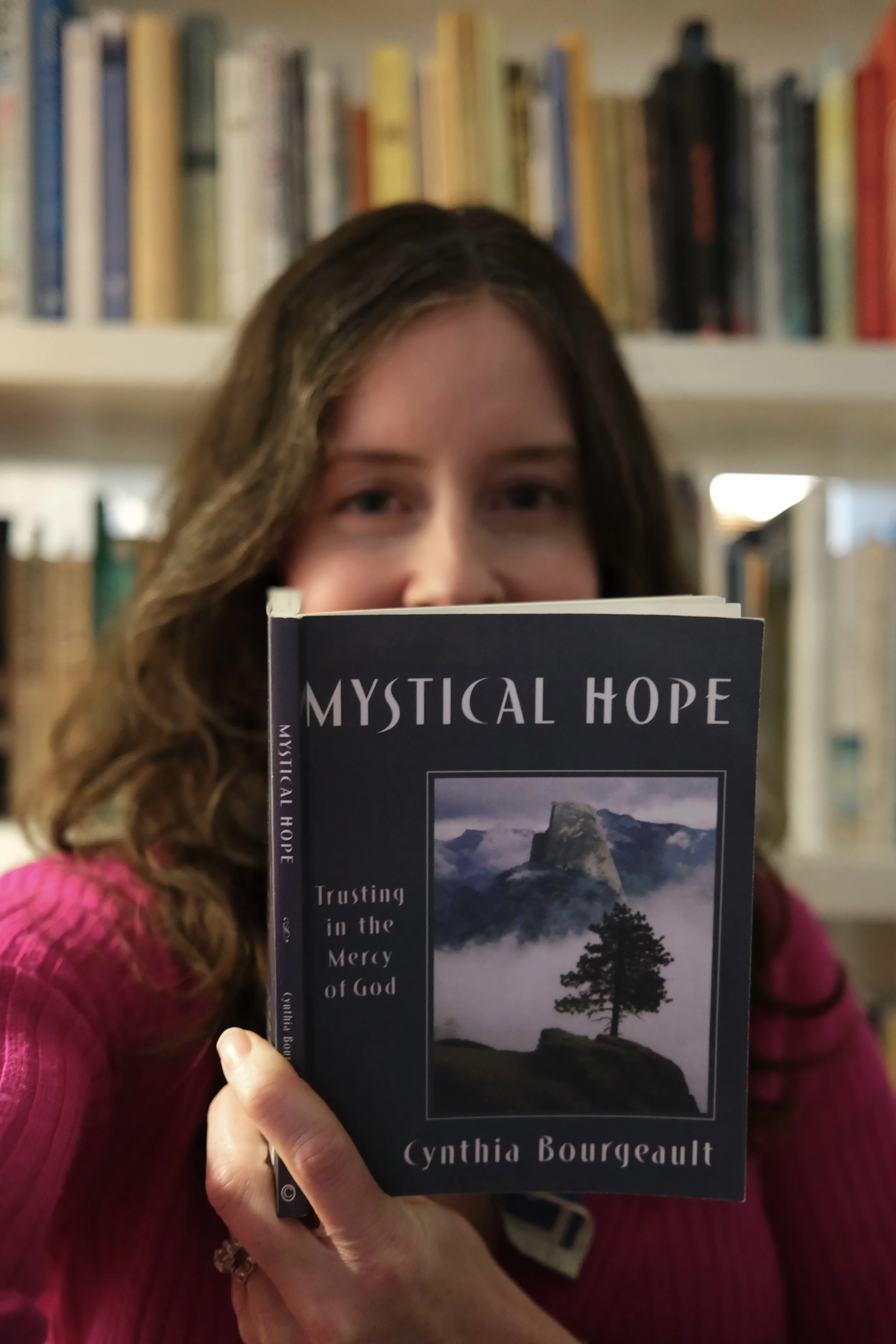
So how do we access this wellspring of mystical hope inside ourselves? As Bourgeault suggests, not by striving toward a better future or securing a desired outcome, but by cultivating presence. Practices such as centering prayer create space for this kind of presence, and I would also add gratitude.
In the early days of grief, a loved one encouraged me to journal three good things that happened each day. This practice was incredibly challenging at first, but over time it gently re-oriented me—not toward fixing my pain, but toward noticing where I was encountering love and goodness, even in the midst of loss.
I believe art and creativity invite us into this same posture. Engaging with art, music, and poetry—or better yet, creating it ourselves—becomes a way of emptying, of loosening our grip on outcome and explanation. In that emptied, attentive space, presence opens, and with it, the quiet, unfounded hope Bourgeault describes—a hope that does not arrive from the future, but emerges from within.
I don’t always operate from this posture, though I approach my spiritual practice at this stage of my life as an opportunity to reawaken my consciousness to this reality. I’m grateful for this grief burst that invited me to dip into the wellspring and trust that it is ever-present—beckoning us all to embody its hope in the world.